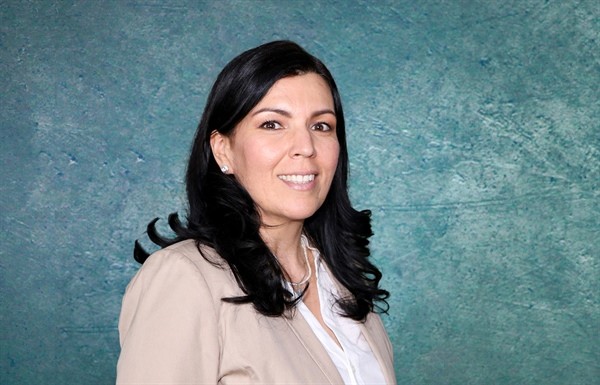
Avenilde Romo Vázquez
Centro de Investigación y de Estudios Avanzados del Instituto Politécnico Nacional (Cinvestav), Mexico
Abstract:Linguistic and cultural diversity constitutes a fundamental characteristic of numerous contemporary societies, as is the case of Mexico with its 69 national languages. However, mathematics teaching is primarily conducted through a single language of schooling, which poses significant challenges for thousands of students learning in multilingual contexts. Faced with this situation, multilingual mathematics education has emerged as a field of research that seeks to understand and transform the conditions of mathematics teaching and learning in contexts characterized by the coexistence of diverse languages and cultures.
In this conference will present the results of the bilateral Mexico-France ECOS project. La educación matemática plurilingüe: retos y perspectivas, developed by researchers from both countries in collaboration with teachers and educational communities. Research experiences will be presented focusing on the design, implementation and analysis of Multilingual Didactic Resources, materials that integrate two or more languages for the study of mathematical content and foster the development of plurilingual and pluricultural competencies.
Drawing on examples related to the quantities of length and time, the contributions of this research to the training of teachers and researchers will be analyzed, as well as to the development of educational proposals that are more inclusive and culturally relevant. Finally, we will reflect on the role of mathematics as a tool to promote dialogue between cultures, strengthen the recognition of linguistic diversity, and contribute to greater educational justice.
Semblance:
Avenilde Romo Vázquez completed her undergraduate degree from the Universidad de Guadalajara (UdeG), her master's degree from Cinvestav, and her PhD from the Université de Paris. She is a member of the National System of Researchers of Mexico (SNII) and works in the Department of Mathematics Education at Cinvestav. Currently, her research focuses on three areas: the teaching of mathematical modeling in the training of future engineers, the training of mathematics teachers, and the design of multilingual tasks to facilitate the construction of mathematical meaning. She is a member of the Pluramaths research group and serves on various editorial committees.